
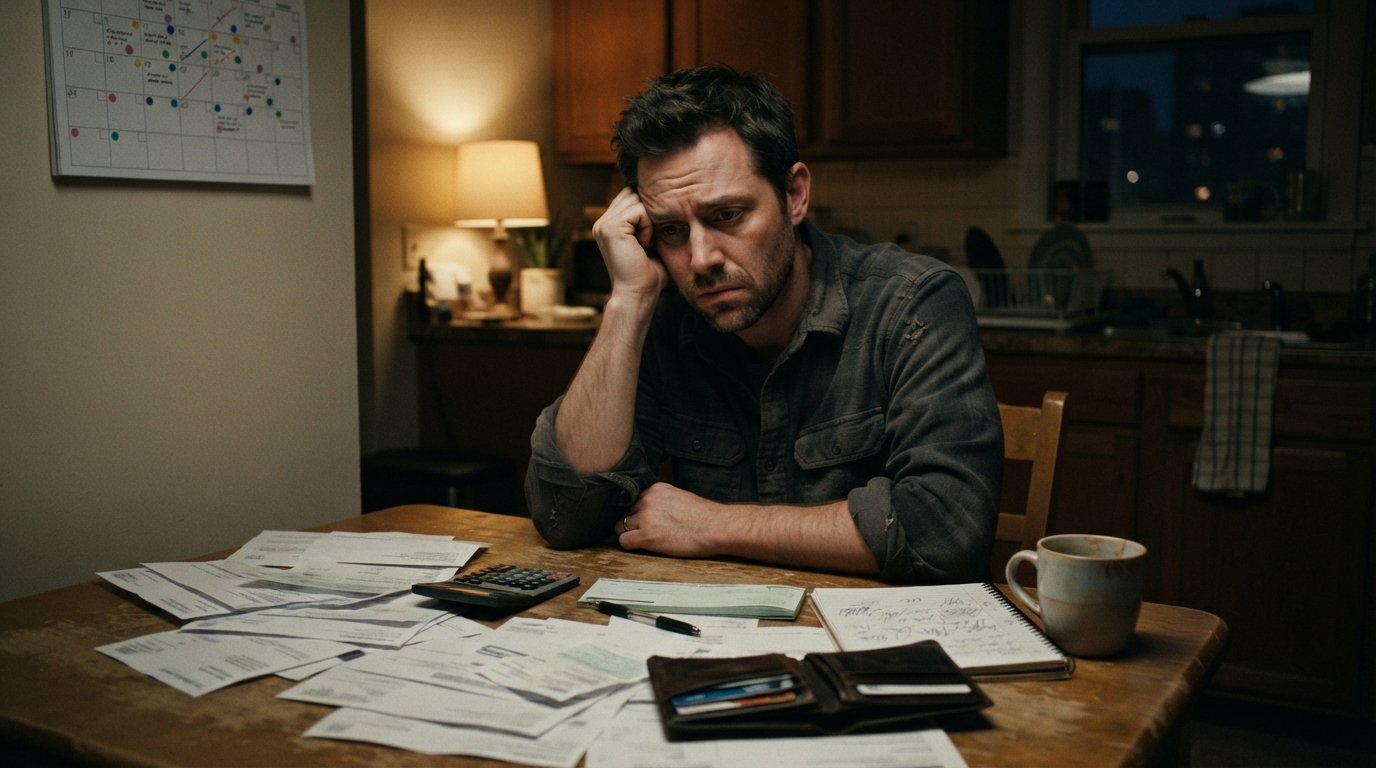
Stopping the Paycheck to Paycheck Cycle While in Debt
Break the paycheck to paycheck cycle while in debt with a step-by-step plan to build breathing room, pay down balances, and find lasting relief.

By Matteo Alvarez
You know the routine all too well: payday arrives, your account balance jumps, and within days it is back down to almost nothing. Rent, utilities, minimum payments, groceries, and gas eat through your check before you have a chance to breathe. Then the waiting begins again. If you are stuck in this loop while carrying credit card balances, personal loans, or medical bills, you are not alone, and you are not doomed to live this way forever. Stopping the paycheck to paycheck cycle while in debt is possible, but it requires a clear plan that addresses both your cash flow and the debt itself at the same time. This guide walks you through practical steps to break the cycle, build breathing room, and move toward lasting financial stability.
Why the Cycle Feels Impossible to Break
The paycheck to paycheck cycle is not a character flaw. It is a math problem wrapped in stress, and the stress makes the math even harder to solve. When most of your income is already committed to minimum debt payments, housing, and basic living costs, there is simply nothing left to absorb an emergency. A car repair, a medical copay, or a surprise bill goes straight onto a credit card, which increases your minimum payments next month, which tightens the squeeze even further.
There is also a psychological trap at work. When money is tight, it is natural to focus on survival mode: get through this week, then worry about next week. Long term planning feels like a luxury you cannot afford. But that short term focus is exactly what keeps the cycle spinning. Creditors count on minimum payments arriving on time, every month, for years. If you only ever pay the minimum, you can stay current on your accounts and still never make real progress.
Understanding this dynamic is the first step. The cycle is not random, and it is not permanent. It is the predictable result of fixed obligations exceeding flexible income. Change either side of that equation, or restructure the debt itself, and the cycle starts to weaken.
Step 1: Get a Clear Picture of Your Money
Before you can fix a problem, you need to see it clearly. Many people in debt avoid looking at their full financial picture because it feels overwhelming. But a simple, honest snapshot is one of the most powerful tools you can build. Start by listing every source of monthly income: paychecks, side gigs, child support, or any other regular money coming in. Then list every fixed expense: rent or mortgage, utilities, insurance, transportation, groceries, and minimum debt payments. Finally, list the total balances and interest rates on each debt.
Once you have those numbers, calculate two things: your total monthly income and your total monthly obligations. If the second number is close to or higher than the first, you have found the core reason you are stuck. You are not failing at budgeting; your budget has no room in it. That is a structural problem, and structural problems have structural solutions.
This is also the moment to check whether you are a good candidate for a debt relief program. If your unsecured debt is large relative to your income and you are experiencing genuine hardship, a structured program may be able to reduce what you owe. You can start by using a free debt assessment tool to get personalized options in minutes without affecting your credit score.
Step 2: Build a Small Buffer Before You Attack Debt
Conventional advice says to throw every spare dollar at debt. That advice fails for people in the paycheck to paycheck cycle because it leaves no room for the next emergency. The moment your car breaks down or a medical bill arrives, you are back on the credit card, and your progress disappears.
Instead, build a starter emergency fund first: even $500 to $1,000 can be enough to break the pattern of new debt. Sell unused items, take on a short term side gig, or redirect one small recurring expense temporarily. The goal is not to get rich; the goal is to stop adding new balances while you work on the old ones.
Once that small buffer exists, you can begin attacking debt without the constant fear that one surprise will undo everything. You are no longer one flat tire away from a financial crisis.
Step 3: Choose a Debt Payoff Method That Fits Your Life
There is no single best way to pay off debt, but there are two proven approaches: the snowball method and the avalanche method. The snowball method has you pay minimums on everything and throw extra money at your smallest balance first. The avalanche method targets the highest interest rate first, which saves the most money over time. Both work; the best one is the one you will actually stick with.
If you are juggling multiple accounts with different due dates, consider a structured plan that simplifies your payments. For a deeper walkthrough of comparing payoff strategies, see our guide on the best method to pay off multiple debts fast. The key is to pick one method, automate your minimums, and direct every extra dollar to your target account until it is gone.
If your balances are so large that even aggressive payments would take a decade, payoff methods alone may not be enough. In that case, negotiating with creditors or enrolling in a debt settlement program can reduce the total amount you owe, which shortens your timeline dramatically.
Step 4: Increase Income and Reduce Fixed Costs
Cutting expenses helps, but there is a limit to how much you can trim. Increasing income has no ceiling. Even an extra $200 to $400 per month can transform your situation when it is directed entirely at debt or savings.
Consider these options to create breathing room:
- Negotiate lower rates on recurring bills like internet, phone, and insurance.
- Take on freelance, gig, or seasonal work that fits your schedule.
- Sell unused electronics, furniture, or clothing online.
- Downsize one major expense temporarily, such as a car payment or subscription bundle.
- Ask your employer about overtime, a raise, or a shift differential.
Each of these moves is small on its own, but together they can free up hundreds of dollars per month. That money becomes your escape velocity: the fuel that finally pushes you out of the cycle instead of just treading water inside it.
Step 5: Consider Debt Relief When the Numbers Do Not Work
Sometimes the math simply does not work. If you owe $20,000 in unsecured debt and can only afford $150 per month, no budget trick will get you out in a reasonable time. That is when it makes sense to explore debt relief options such as debt settlement, debt management, or credit counseling.
Debt settlement programs work by negotiating with creditors to accept less than the full balance owed. This can reduce your total debt, lower or eliminate interest, and consolidate multiple payments into one monthly deposit. It is not right for everyone, and it does have tradeoffs: it can negatively impact your credit score, and forgiven debt may be taxable. But for people facing genuine hardship who have already explored other options, it can be the difference between years of minimum payments and a clear path to being debt free.
If you are considering this route, a matching service can connect you with vetted partners who specialize in unsecured debt. Many people also explore short term loan options to cover immediate expenses while they work on a longer term plan. Platforms like ExpressCash connect consumers with third party lenders who may offer payday loans, installment loans, and lines of credit for people facing unexpected expenses, including those with less than perfect credit. Just be cautious: short term loans can be expensive, so use them only as a bridge, not as a permanent solution.
Step 6: Protect Yourself From Future Cycles
Breaking the paycheck to paycheck cycle is not just about paying off debt; it is about building systems that keep you out of the cycle for good. Once your debt is under control, shift your focus to three habits: regular saving, spending with intention, and reviewing your budget monthly.
Automate a small transfer to savings on every payday, even if it is $20. Build your emergency fund until it covers three to six months of essential expenses. Use a simple zero based budget or a spending app to track where your money goes. And review your progress every month so small problems get caught early instead of snowballing.
Finally, avoid the trap of celebrating progress by taking on new debt. A paid off card is not an invitation to spend; it is a tool that should stay at a zero balance unless you can pay it in full each month. The habits that get you out of debt are the same habits that keep you out.
Your Next Step Toward Freedom
Stopping the paycheck to paycheck cycle while in debt is not about willpower or luck. It is about seeing your numbers clearly, building a small buffer, choosing a payoff strategy, increasing income where you can, and getting professional help when the math does not work. You do not have to solve everything today. You just have to take one step, then another, until the cycle weakens and eventually breaks.
If you are ready to see what debt relief could look like for your situation, start with a free assessment. It takes minutes, it does not affect your credit score, and it can show you options you did not know you had. The road out of the cycle starts with a single decision to stop treading water and start moving forward.